How much is your home worth?
Generate a free property report instantly OR
arrange an accurate market appraisal.

Most buyers arriving in Chadwell Heath are struck by how much house you can get for your money compared to areas just a few miles west. The area’s Edwardian and inter-war terraced homes can make wonderful family homes, within the low-rise streets of a purpose-built early-20th Century suburb.
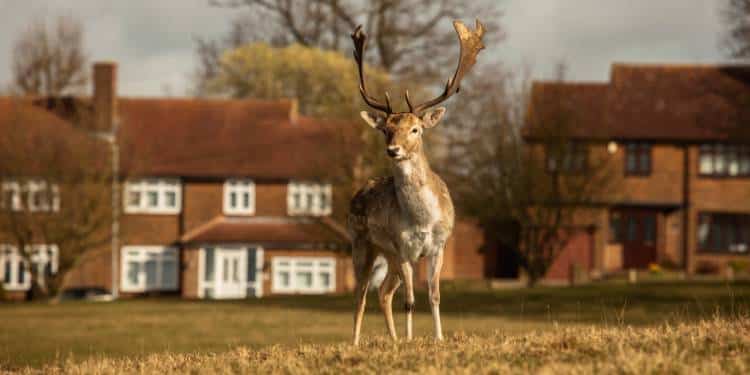
At first glance, Chadwell Heath’s streets are more uniform than neighbouring Romford or Ilford’s. But whenever you buy an older property, keep in mind that its past owners may have differing approaches to maintenance, however similar the original architecture. Do you know what to look for in an Edwardian terrace or 1930s semi-detached house? There can also be quite a bit of variation between the area’s increasing range of apartment buildings. In this guide, we explain some of the architectural styles you’re likely to come across in Chadwell Heath, and details to look out as you house-hunt.
| Property Type | Typical Period | Typical Tenure | Approximate Price Range |
|---|---|---|---|
| Terraced house | Edwardian / inter-war | Freehold | £350,000 to £470,000 |
| Semi-detached house | Inter-war / post-war | Freehold | £380,000 to £480,000 |
| Purpose-built flat | Post-war / modern | Leasehold | £180,000 to £280,000 |
| New-build flat/house | 2020s onwards | Freehold / Leasehold | £250,000 to £500,000 |
Most Chadwell Heath properties are terraced houses, which selling for an average price of just under £430,000 over the past year, as per Rightmove data. Bay-fronted Edwardian and inter-war houses on the long residential streets around the High Road and Billet Road corridors make up a sizeable proportion of these popular family homes. Semi-detached houses, just slightly smaller and more affordable, follow.
Flats follow, selling for just under £225,000 and spanning converted houses and purpose-built flats from the mid-20th Century – but new developments are on the rise. If you are buying a flat, new or older, then check the leasehold carefully. Checking the lease length, service charges and other conditions could avoid unexpected costs after purchase.
Chadwell Heath’s streets don’t have any conservation areas, either under Barking and Dagenham or Redbridge. This means there can be less consistency when it comes to period features and alterations, but it can make your own property maintenance and alterations simpler. With no Article 4 Directions removing permitted development rights in local residential streets, you have more flexibility to extend, alter windows, or add driveways without requiring planning consent.
If you’re buying close to the borough boundary, it’s worth confirming whether the London Borough of Barking and Dagenham or London Borough of Redbridge local authority planning rules apply to you.
The Edwardian terraces in Chadwell Heath were built quickly to meet demand from railway commuters, but the quality can be fairly uniform. Delightful original features like tiled paths and stained glass have survived on many homes, but original sash windows are now the exception rather than the rule.
Inter-war properties in Chadwell Heath tend to sit on slightly more generous plots than the earlier terraces, with their wider back gardens being ideal for families. The transition from solid to cavity wall construction happened during this period, so the decade of build matters for survey purposes. Properties built before1930 are more likely to have solid walls, something worth considering when it comes to insulation and damp.
Post-war properties are less architecturally consistent, with a range of styles popping up. Their cavity wall construction can be helpful for insulation, and reduces damp risk, though ceiling heights and room proportions are typically less generous than their Edwardian equivalents.
Chadwell Heath is in the early stages of a significant development phase, with the most substantial influence being the Chadwell Heath Transformation Area. Put forwards as a 32-hectare strategic site in the Barking and Dagenham portion of the area, it aims to deliver approximately 4,000 new homes alongside tech and media industry presences to raise local employment options.
On top of that, it’s set to essentially create a new community focus around the central Market Square complete with play areas and pedestrian-friendly infrastructure. This is a long-term project that’s still in the early stages, but certainly something to keep an eye on. More immediately, Bellway’s Kingsgate Park is delivering 692 energy-efficient homes with secure parking and landscaped gardens in Redbridge. These contemporary homes are already under way, with more phases to follow.
Outside space is where Chadwell Heath excels versus more central East London areas. The larger period terraces usually come with large back gardens, and even those with a kitchen extension tend to hold onto a decent, usable space.
Front gardens on Edwardian terraces can be modest in depth but where it’s survived, their decorative tiling is a charming feature that you may find worth the trade-off. A significant proportion have been converted to hardstanding for off-street parking over the decades, which is practical but worth checking for planning compliance, particularly if it involves a dropped kerb. Interwar semis typically offer wider rear gardens than the terraces. Later terraces often come with the added convenience of off-street parking too.
When it comes to flats, they generally have communal garden areas but their upkeep can vary. Find out the management costs and their maintenance strategies before you buy. New build houses at schemes like Kingsgate Park are likely to include private gardens or terraces, with communal space for flats. However, every unit and development will have its own setup.
But that’s not all. Chadwell Heath residents are in easy reach of some excellent parks, from St Chad’s Park on your doorstep, to the woodlands of Hainault Forest.
Chadwell Heath Edwardian and interwar houses, and properties with alterations or extensions, make a proper survey essential. A mortgage valuation is not a substitute, you need to detect potentially costly issues sooner rather than later.
The Royal Institution of Chartered Surveyors offers information on what each survey level entails. A RICS Level 2 or Level 3 Building Survey is strongly recommended for period properties like Chadwell Heath’s interwar and Edwardian homes.
It’s always better to be an informed buyer, and the rule particularly applies in rapidly evolving Chadwell Heath. Whether you’re drawn to the area’s period detached houses, or keeping an eye on the new-build schemes coming forward, understanding the area’s property types can make all the difference. Register as a buyer to hear about properties as they come to market, or contact us to talk through what’s available.
Terraced houses are found throughout in Chadwell Heath, many Edwardian or interwar period with semi-detached houses occasionally coming to market. Buyers will find some houses converted into flats too. Purpose-built flats were once less common, but there are several new-build blocks, with large developments set to bring hundreds more over the coming years.
Houses in Chadwell Heath are typically sold freehold, with purpose-built flats and new-build apartments generally being leasehold. Before you buy leasehold properties here or elsewhere, check the lease length and terms, including service charges and any other potential costs or limitations.
No conservation areas have been designated in residential areas of Chadwell Heath by either the London Borough of Barking and Dagenham or the London Borough of Redbridge. This means buyers can utilise their permitted development rights to extend or alter their homes, sometimes without planning consent.
The main concerns for Edwardian and interwar properties which make up much of Chadwell Heath’s property market are damp in solid brick walls, chimney condition, the upkeep of flat-roof extensions, and older drainage and electrical systems. It is also worth checking that any loft conversions or rear extensions have the relevant building regulations approval in place. A full RICS Level 2 or Level 3 Building Survey is strongly recommended.
Bellway’s Kingsgate Park scheme on Billet Road has already commenced over 600 homes, the beginnings of a larger 1,300-home project bringing new houses and apartments to the area. The longer-term Chadwell Heath Transformation Area project plans could introduce around 4,000 homes on a 32-hectare site alongside employment and community uses, though this is a multi-phase, longer-horizon scheme.
Generate a free property report instantly OR
arrange an accurate market appraisal.
We’re here to help with any property-related queries you may have.
"*" indicates required fields

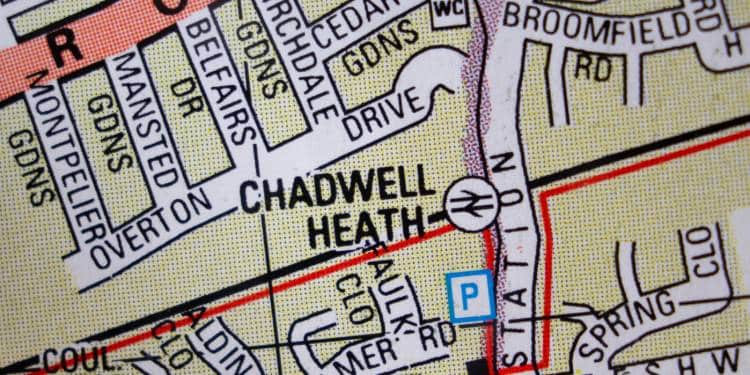
Nineteen minutes to Liverpool Street. Average property prices around £396,000. If those two facts sitting side by side surprise you, you'...
Chadwell Heath looks like a straightforward East London suburb - until you realise two streets a minute apart can differ by tens of thous...

Discover a lively pocket of East London where old industry, riverside paths, major attractions and local culture meet. This guide to Stra...