How much is your home worth?
Generate a free property report instantly OR
arrange an accurate market appraisal.

The Elizabeth line has shaken up property pricing in Chadwell Heath, and there’s a wave of regeneration activity on the horizon. What that means for buyers, is that the gap between the area’s traditionally better-positioned roads and its overlooked ones is shifting as we speak.
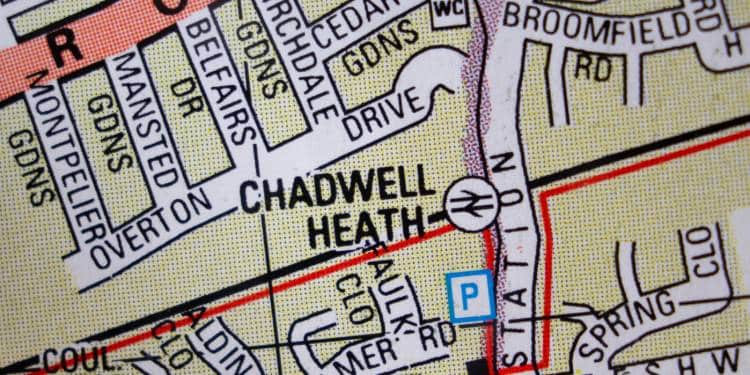
Chadwell Heath falls between two boroughs, Redbridge to the north and Barking and Dagenham to the south. On paper, that’s a consideration for council tax bands, planning policy, and school catchments. Add the complexities of the Elizabeth line station and regeneration zone to the original map of 1930s residential streets weaving around the High Road, and it’s a complex property market to navigate. That’s why it’s worth getting to know the area before you buy.

In this guide, we cover the streets that consistently achieve the highest prices, alternatives that property hunters might have missed, and parts of Chadwell Heath that are worth watching as development activity steps up.
Traditionally, it’s the good-sized 1930s semi-detached or detached houses with off-street parking that tend to sell well. Those located by either the Elizabeth line station or local schools with the best reputations can see another jump in demand.
Rightmove estimated the average house price in Chadwell Heath at £427,549, with terraced properties averaging £466,945 and semi-detached houses averaging £483,095 between 2025-26. As you can see, Chadwell Heath’s premium addresses can fetch £100,000 to £200,000 more than local averages.
At a broad sweep, Chadwell Heath’s north-south borough boundary marks out two halves of Chadwell Heath. But if you’re planning to move to the area, take a closer look.
| Zone | Character | Who it suits | Price indicator |
|---|---|---|---|
| North of High Road (Redbridge) | Quieter 1930s residential streets; larger plots; Redbridge borough schools catchment | Families prioritising schools and space | Above area average |
| South of High Road (Barking & Dagenham) | Denser terraced stock; closer to station; regeneration activity nearby | First-time buyers, investors, commuters | At or below area average |
| Station Road area | Mixed use near station; flats and smaller terraces; strongest Elizabeth line access | Commuters, buy-to-let investors | Flat prices are below the area average, with houses staying competitive |
| Regeneration area (Billet Road / Back Lane area) | Currently transitional; industrial and residential mix; new development underway | Investors with a medium-term horizon | Lower entry point but higher uncertainty |
The Redbridge/Barking and Dagenham boundary matters for council tax, with the two boroughs setting their own rates, but more importantly for many Chadwell Heath buyers are school catchments. Redbridge and Barking and Dagenham operate separate school admission processes.
Chadwell Heath station sits on the Elizabeth line in TfL Zone 5, with step-free access throughout. Streets within a ten-minute walk of the station understandably attract a commuter premium, with Station Road itself and the roads immediately east and west offering the shortest walk times. That said, the streets further away offer a quieter atmosphere, so think about your own priorities – would you rather have a shorter commute, or return home to a more peaceful road?
School catchments in Chadwell Heath can be exceptionally competitive, as evidenced by London Borough of Redbridge admissions data. In 2026, the furthest acceptance based on proximity was 1,878 metres from Chadwell Heath Academy by their measuring system. The furthest Chadwell Primary School acceptance was 0.787 miles in 2025, and Grove Primary School on Chadwell Heath Lane just 0.697 miles.
95.32% of applicants get their first choice school in London Borough of Barking and Dagenham, according to 2026 data – the highest proportion in London. It offers the Ofsted Outstanding-rated Warren Junior School on Gordon Road and The Warren School on Whalebone Lane North.
Apart from the borough, plot size is a major factor in Chadwell Heath property pricing. Many buyers appreciate the 1930s semis on the wider northern roads for their floor space and generous gardens. Streets within a ten-minute walk of the Elizabeth line station also trade at a premium over those requiring a longer walk or a bus connection.
With so many homes in a similar style, condition and presentation matter more than usual in this part of East London. Two 1930s semis on the same street can sell for significantly different prices, depending on original features, garden condition, and quality extensions added with planning permission.
Chadwell Heath buyers can find better prices for streets that are hidden in plain sight. Look just off the most well-known roads, and just far enough from the station to deter some commuters, to find lower prices without much sacrifice.
Back Lane and the streets immediately north of Billet Road currently sit at a lower price point partly because of the transitional nature of the surrounding land. Development consent has been granted for new housing on Back Lane itself, and the broader Billet Road corridor is the focus of the Kingsgate Park scheme, where Bellway is delivering 692 new homes as part of a larger 1,300-home project, with construction commencing in spring 2025 (Bellway, 2025). Buyers who can tolerate a few years of construction activity nearby are accessing a pocket that will look materially different by the late 2020s.
Freshwater Road and the streets around the Nicholls & Clarke headquarters are less talked about than the residential streets further north, but the housing stock here is solid and prices reflect a slight discount to the Redbridge-side equivalents. As regeneration activity in the wider employment zone matures, this discount may narrow.
Smaller terraced streets between the High Road and the station are often overlooked by buyers focused on the larger semis to the north. These properties offer a lower entry point into Chadwell Heath and strong rental demand, given their proximity to the station. For investors, this is a more practical price point than the family semis, with yields that reflect the lower purchase price.
The honest caveat on the regeneration-fringe streets is timing uncertainty. Planning consents exist, funding is committed, and construction has started in some cases, but large-scale regeneration schemes in East London have a history of running beyond initial timelines. Buyers in these pockets should treat the upside as a medium-term prospect rather than an immediate repricing event.
Chadwell Heath is overwhelmingly a 1930s suburb, and many people would point to its bay-fronted terraces and semi-detached houses as the area’s signature style. Properties to the north, within Redbridge, tend to have wider plot frontages with more detached homes.
But let’s go further back in time. Closer to the High Road, buyers will find commercial frontages interspersed with terraced housing, some dating from the late Victorian and Edwardian eras. These are less uniform, sometimes altered or extended over the decades.
Flats in Chadwell Heath are largely concentrated in purpose-built blocks from the post-war period, with newer apartment buildings nearer the station. Kingsgate Park and further planned regeneration could add hundreds of flats to the local area too. Our architectural guide answers your questions in more detail.
As a quintessential commuter town, Chadwell Heath has several long-established owner-occupier streets in the Redbridge area. Many buyers are looking to the years ahead, often with a close eye on school catchments, and there’s a fairly low turnover.
But there’s also a decent rental sector, particularly on the streets closest to the station and the High Road. Of course, it’s easy to see the appeal of an Elizabeth line station-adjacent flat in this commuter hotspot. The southern streets in the Barking and Dagenham portion have a higher proportion of private rented properties, reflecting the lower entry prices and stronger investor activity in this part of the area.
The new-build homes at Kingsgate Park and the wider regeneration zone will introduce a significant volume of new stock, some of which is likely to be built-to-rent or designated affordable rent. If it rolls out as planned, this will reshape the southern portion of the rental market over the coming years – something for landlords to bear in mind.
| Zone | Predominant tenure | Typical buyer / tenant profile |
|---|---|---|
| Northern streets (Redbridge) | Owner-occupied | Families, long-term buyers, upsizers |
| Southern streets (Barking & Dagenham) | Mixed, higher rental proportion | First-time buyers, investors, private tenants |
| Station area | Higher rental concentration | Commuters, Elizabeth line workers, young professionals |
| Regeneration area | Transitional, new-build incoming | Investors, first-time buyers, new-build buyers |
Development is being put in motion around Billet Road and Freshwater Road, which could bring a refresh to former industrial sites. But it’s also worth considering the impact of construction work in the meantime.
Kingsgate Park, Billet Road. Bellway’s forecast 1,300-home development is likely to generate construction activity for a number of years. Once complete, the new homes will bring new residents, an improved public realm, and greater footfall to the southern part of the area. That said, buyers on nearby streets should price in the near-term disruption.
Chadwell Heath Transformation Area. This ambitious 32-hectare creative and industrial intensification zone centres on the former Muller site, amongst the southern residential streets, and could deliver 4,000 new homes alongside employment opportunities. Set for completion in 2041, this is a long-term project.
The most sought-after streets are in the northern, Redbridge portion of Chadwell Heath, including Wangey Road, Whalebone Lane North, Selwyn Avenue, and Manor Road. These offer larger 1930s semi-detached houses, wider plots, and access to Redbridge school catchments. Buyers prioritising Elizabeth line access should also consider streets close to the station on the Barking and Dagenham side.
Redbridge streets carry a premium that intensifies the closer you get to the Elizabeth line station and popular schools, with plot size, property type and maintenance standard also affecting house prices.
The streets closest to the Elizabeth line station offer the clearest rental proposition, with the appeal of commuters. nvestors considering the regeneration fringe around Billet Road should factor in the significant new-build supply coming through the Kingsgate Park scheme and the wider Transformation Area over the next decade.
The northern streets in the Redbridge section of Chadwell Heath tend to be popular with families, partly for sought-after school catchments and partly for property size. These streets have larger 1930s semi-detached houses with spacious gardens, are mostly owner-occupied and see a low turnover.
In addition to the 1,300-home scheme that’s already under way starting with Kingsgate Park, the proposed 32-hectare Chadwell Heath Transformation Area could deliver around 4,000 new homes. It would also set out to attract creative and technology-based employers, and establish a new centre with community spaces and retail.
Once you’ve identified the right pocket of Chadwell Heath, the practical next step is knowing what’s available there and moving quickly when it comes up. Register as a buyer to be notified of properties matching your criteria, or register as a tenant if you’re looking to rent in the area. If you’d prefer to talk through what the street-level differences mean for your specific situation, contact us and we’ll give you a straight answer.
Generate a free property report instantly OR
arrange an accurate market appraisal.
We’re here to help with any property-related queries you may have.
"*" indicates required fields

Nineteen minutes to Liverpool Street. Average property prices around £396,000. If those two facts sitting side by side surprise you, you'...

Chadwell Heath consistently offers more space per pound than areas just a few miles west - but that value comes with caveats. The area's ...

Discover a lively pocket of East London where old industry, riverside paths, major attractions and local culture meet. This guide to Stra...