How much is your home worth?
Generate a free property report instantly OR
arrange an accurate market appraisal.

Newbury Park doesn’t divide into dramatically distinct zones in the way that some larger London districts do, but there are meaningful differences between its micro-locations that affect both property value and daily life. The gap between a well-positioned road close to Newbury Park station, within a sought-after school catchment, and a street further out on a busy cut-through can run to tens of thousands of pounds even for broadly similar houses. Knowing where those divisions fall is the starting point for buying or renting well in IG2.
The area sits within the London Borough of Redbridge, with the Eastern Avenue (A12) running through the middle and acting as a rough dividing line between the streets to the north and those to the south. The station sits on the south side of the Eastern Avenue and draws the most consistent buyer interest. Streets on the northern side tend to be marginally quieter and are closer to Fairlop Waters and the Barkingside amenities, though slightly further from the tube.
| Street / Road | Property Type and Price Range |
| Leyswood Drive | Extended semis, detached; £700k – £1.2m+ |
| Yoxley Drive | 4–5 bed semis/detached; £650k – £900k |
| Aldborough Road South | 4-bed terraces/semis; £650k – £800k |
| Kimberley Avenue / Clifton Road | 3-bed terraces/semis; £450k – £580k |
| Kenwood Gardens (Woods Estate) | Detached, larger semis; £600k – £800k+ |
All price data is indicative and subject to change, based on recent listings and sold prices. See Rightmove sold prices and HM Land Registry for the most current figures – or search our properties for active listings.
The headline figure from HM Land Registry / Rightmove data puts the average Newbury Park property price at around £478,000 over the past year. But averages don’t tell you much about the real variation across the area’s streets and property types.
The biggest driver of price difference within Newbury Park is extension work. An unextended three-bedroom terrace in decent condition will trade at a discount of £50,000 to £100,000 or more against an equivalent house that’s been properly extended to the rear and into the loft, particularly if the works have added a bathroom and opened up the ground floor. Buyers who want to buy low and do the work themselves should focus on unextended stock on well-regarded streets.
Proximity to the station is the second major variable. Within the same street, a house on the station side of a busy junction will typically hold its value better and sell more quickly than one on the far side. The same is true across streets: everything else being equal, the station-side roads command a few thousand pounds’ premium per bedroom over streets that require a longer walk.
School catchments are the third lever. Streets that fall within the Seven Kings High School or Valentines High School catchment zones are verifiably more in demand. This shows up most clearly in asking prices that hold firm through slower markets.
| Price Driver | Typical Premium or Discount |
| Extended vs unextended terrace | +£50k – £100k+ for well-extended |
| Walking distance to station (under 8 min) | +5–10% vs further streets |
| Seven Kings / Valentines catchment | +5–8% vs non-catchment equivalents |
| Wider plot / corner / end-of-terrace | +£20k – £50k depending on garden size |
| Flat vs house (per bedroom) | Flats significantly lower at £265k–£350k |
Want to know more? Find out what it’s like living in Newbury Park and explore the area’s property types.
More broadly, the streets immediately north of the Eastern Avenue between Horns Road and the Barkingside boundary are less regularly featured in searches for Newbury Park property. They’re within the same postcode, served by similar schools, and within reasonable range of the station by bus or a 15 to 20-minute walk. For buyers willing to trade a slightly longer walk to the tube for a lower price per square metre, they’re genuinely worth considering.
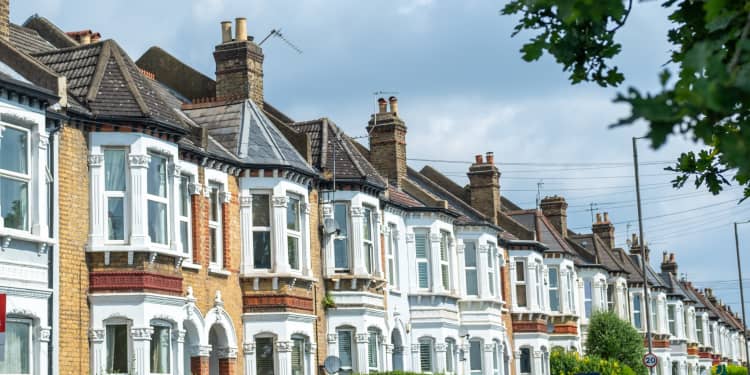
Newbury Park’s architectural character is almost entirely interwar. The 1930s development that followed the Eastern Avenue improvements gave the area its predominant look: red-brick semi-detached houses with hipped roofs, bay-fronted ground floors and modest front gardens, interrupted occasionally by terraced rows built slightly more tightly.
There are no mews streets or garden squares in Newbury Park. The area’s green space is provided by public parks rather than private communal gardens. This is worth noting for buyers who value those particular features and may be comparing Newbury Park against areas that do offer them.
Newbury Park’s market is predominantly owner-occupied in the house stock. The 1930s terraces and semis attract families who buy and stay, and turnover on the best streets is low. The rental sector is concentrated more heavily in the flat stock, particularly the purpose-built blocks near the station and along the Eastern Avenue.
On the quieter residential streets to the north of Eastern Avenue, owner-occupation rates are high and rental properties relatively rare. These are the streets that most often see long tenures: families buying in their thirties and staying well into retirement. New listings come up infrequently, which is why they tend to sell quickly when they do.
The most significant piece of infrastructure that affects the Newbury Park property market is already in place: Newbury Park Underground station on the Central line, and the nearby Seven Kings and Ilford stations on the Elizabeth line. The latter opened fully in 2022 and has had a measurable effect on demand for properties within a reasonable walking or cycling distance of Seven Kings station.
This covers 32 hectares immediately to the east of the wider IG2 area, and is one of the larger development schemes in the Redbridge district. It’s planned to deliver around 4,000 new homes alongside schools, shops and employment space, including a focus on gaming and tech industries. Bellway’s Kingsgate Park development on Billet Road, delivering 692 energy-efficient homes, was scheduled to begin construction in spring 2025. This development sits east of Newbury Park rather than within it, but it could bring additional amenities and workers into the broader area, supporting demand.
This plan commits to housing growth across the borough, with Newbury Park sitting in an area designated for gradual intensification rather than wholesale regeneration. That should mean a steadier pace of change than areas like Stratford or Barking, which is generally what buyers in the area prefer. For the most current planning applications affecting specific roads, check the Redbridge planning portal.
Smaller developments continue to affect individual streets, particularly where older commercial or multi-use properties are being converted or redeveloped for residential use. The Bush Close scheme near Newbury Park station, comprising seven new houses with potential for further development, is one example of the type of site-specific scheme that’s adding to supply close to the tube.
Leyswood Drive and Yoxley Drive are consistently the most sought-after for larger family houses. Kimberley Avenue and Clifton Road offer good value at the mid-market level. Kenwood Gardens on the Woods Estate is worth considering for buyers who want a slightly different residential feel.
Yoxley Drive, Oaks Lane and several streets south of the Eastern Avenue near the station entrance are all within five to eight minutes on foot of Newbury Park Underground station. The station is on the Central line, Zone 4.
Catchment boundaries shift year to year depending on application numbers. The streets along Aldborough Road South and toward the Seven Kings station area have historically been within or close to the catchment. Check current boundaries via the Redbridge school admissions pages. Always verify with the school before making a purchase decision based on catchment.
Limited. The area is predominantly 1930s stock. Memorial Heights near the station is one of the more recent purpose-built developments. Smaller infill schemes appear from time to time. The Redbridge Local Plan supports gradual residential growth rather than large-scale schemes.
The roads running north of the Eastern Avenue between Horns Road and the Barkingside boundary tend to be quieter than the station-adjacent streets. Oaks Lane and the streets around the Oaks Park High School end of the area are also more removed from traffic noise.
The gap between the most and least expensive streets in comparable house types can reach £100,000 to £200,000, driven by extension quality, station proximity, plot size and school catchment. An unextended three-bedroom terrace on a busy road might sell at £440,000 while a well-extended equivalent on a quiet road close to the station achieves £600,000 or more.
Knowing which streets in Newbury Park suit your priorities makes a real difference to how you buy. Whether you need to be within a specific school catchment, want the shortest possible walk to the tube, or are looking to buy on a quieter road with room to extend, the choice of street matters as much as the choice of property type.
Highcastle Estates operates across Newbury Park and the wider east London market, with direct knowledge of which roads are moving, where the value is, and where the catchment lines fall. Book a valuation or contact us today.
Generate a free property report instantly OR
arrange an accurate market appraisal.
We’re here to help with any property-related queries you may have.
"*" indicates required fields


Discover a lively pocket of East London where old industry, riverside paths, major attractions and local culture meet. This guide to Stra...

From Stratford Broadway’s busy shopping stretch to the fast-changing streets around Stratford town centre, this area blends everyday conv...

Wondering what it might be like to move to Newbury Park? If you’re considering a move, this blog will give you a